

SONOFF S31 WiFi Smart Plug with Energy Monitoring, 15A Smart Outlet Socket ETL Certified, Work with Alexa & Google Home, IFTTT Supporting, 2.4 Ghz WiFi Only (4-Pack)
$5.99
Related Products



From the brand

SONOFF
Foster innovation to make life simpler and smarter.

SONOFF specializes in the development and production of smart home hardware and products.
It is located in Shenzhen, which is the Chinese electronics market, and due to our strong production capacity, SONOFF is able to provide high-quality products at an affordable cost.
SONOFF WiFi Smart Home
SONOFF Smart Home

Voice command
Tell your voice assistant what you need, make life smarter.


Is Discontinued By Manufacturer : No
Product Dimensions : 3 x 2 x 1.02 inches; 13.12 ounces
Item model number : S31
Date First Available : February 20, 2021
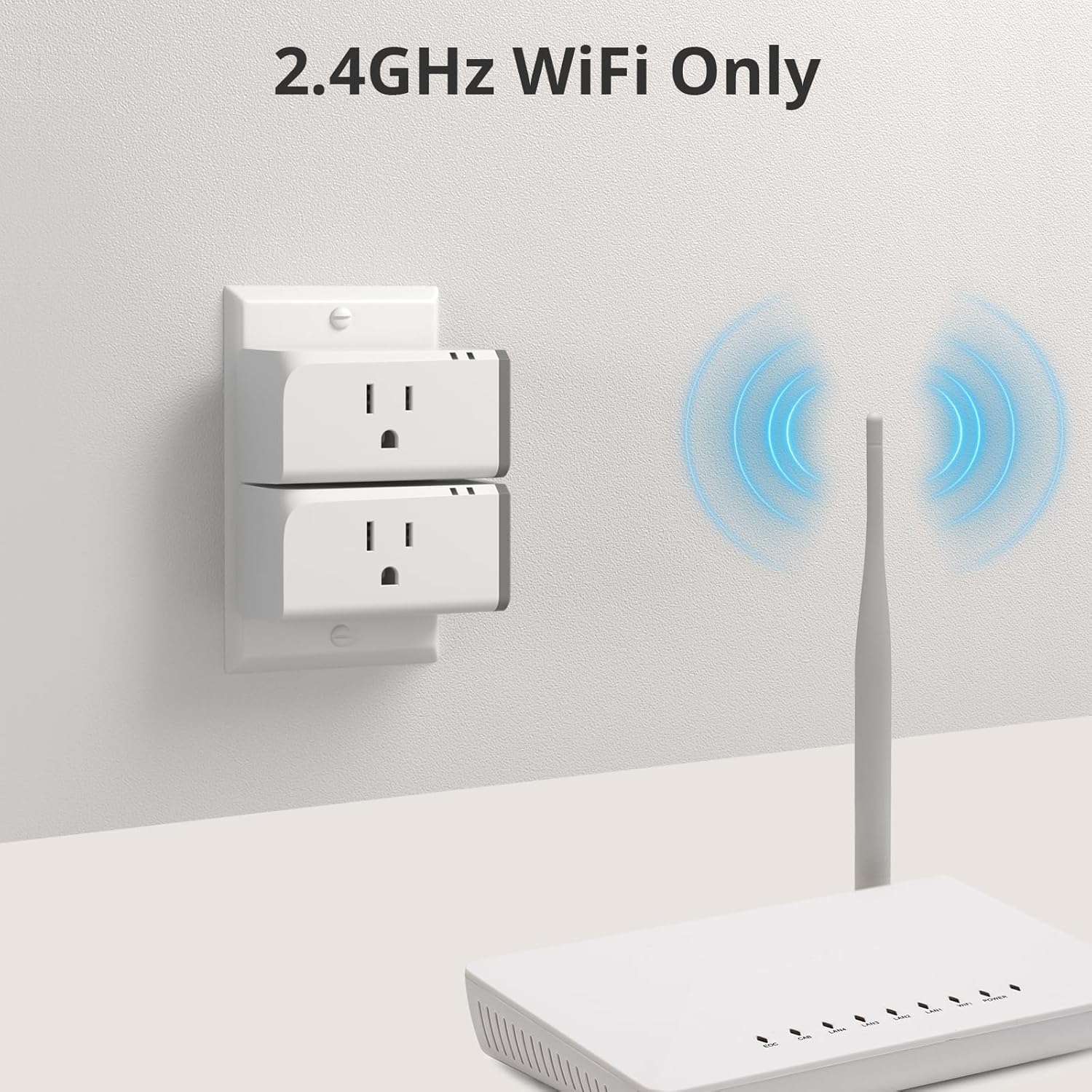
Note: The SONOFF S31 only works with 2.4GHZ WiFi, not 5GHZ WiFi at all, and not 2.4GHZ/5GHZ Dual Band WiFi. make sure your network has different sids for 2.4GHZ and 5GHZ networks, and the device will work properly.
Monitor Energy Consumption: Keep track of real-time power, current and voltage of your appliances on App.and Measure your appliances’ power consumption for 100-day daily/monthly energy usage data and total electricity cost.
Works with Alexa & Google Home,IFTTT Supporting: Link “eWeLink Smart Home” skill. You can directly ask Amazon Echo/Echo Dot/Amazon Tap to turn on/off your SONOFF devices.Link “eWeLink Smart Home” on Google Home app, start to voice control your SONOFF devices on Google Home.
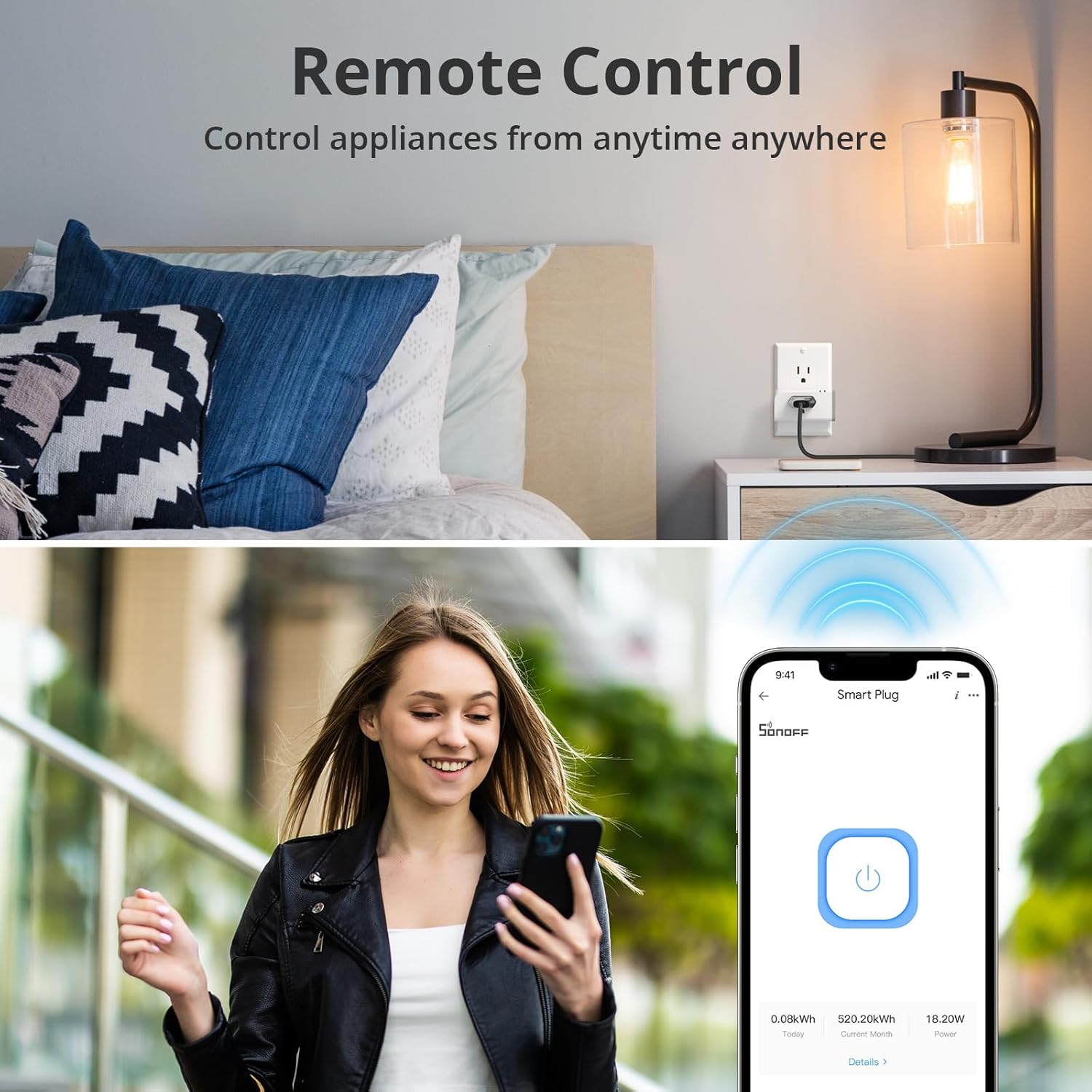
Smart Remote Control Plug: You can remotely/timely control ON/OFF any connected home appliance via APP eWeLink on your smart phone or tablet. No distance/time limitation.
Set time schedules for the lights and home appliances: You can set countdown/single/repeat timers to auto-turn on/off the WiFi controlled outlet on App. One tap ON/OFF Energy Saving.
Share control of devices to others: You can simply share control of your home appliances to others so that they can also turn on/off the devices remotely.
10 reviews for SONOFF S31 WiFi Smart Plug with Energy Monitoring, 15A Smart Outlet Socket ETL Certified, Work with Alexa & Google Home, IFTTT Supporting, 2.4 Ghz WiFi Only (4-Pack)
Add a review

$5.99
Bird Man –
Great unit for ESPHome
Love these!Easy to use and Compatible with Flashing over to ESPHome for Home assistant.I do wish it was a bit easier but if you do a lot of these can just make a jig to program.Power monitoring seems to be accurate checking with a KilowattThe inside traces seem to be thick enough to handle the amperage it is rated at.Function great for my needs to monitor energy of devices and trigger automation and also be able to toggle on and off the device.Use with my Washer to tell when it is done since it can do 15 amps.
Scott J. –
works great, especially after flashing tasmota open source firmware.
Easy to flash with tasmota firmware. Can easily sense power usage and set on/off timers with new firmware. I like the button on the end so it’s easy to press while the plug comes out the front. great for a diy/maker person who likes to unlock the capability of these devices.
JS –
Excellent smart switch
I’ve purchased several of these smart switches and think they’re are great. Getting them recognized can be a bit tricky, but once they’re connected to the network, the app never fails to recognize them. The first one I bought was about three years ago, and it’s as reliable as ever.It can be a real bonus to be able to see what the power draw is from the connected device. For example, if you are running a string of 10 garden lights, and each one draws 5 watts, then one day you see that the string is only using 45 watts, you know one is blown, even if you can’t see it at night.It would be great to find an app that would run not only these switches, but some of the other brands we have also, but that’s not the fault of this manufacturer.In summary, it a high quality, reliable product that does what it’s advertised to do and more.
J. Whiteside –
Own Over 25 Of Them, Tasmotized And Mostly Happy
Like many other reviewers, I have purchased this particular switch to install Tasmota on. I use them for energy monitoring, and in some cases their “original intent” – outlet switching, in my home. I buy whatever pack is cheapest per unit at the time, be it 1, 2 or 4 pack versions. They’re all the same in my experience.To get them installed with Tasmota, I first tried to solder leads to them. Then I tried to solder pin headers and that was a little bit easier. I’m slightly beyond entry level skill with soldering, but I destroyed at least three units in this learning process. I finally graduated to micro-grabber electrical test clips and have ripped through over two dozen conversions now without incident.Let’s be frank. I’d rather Sonoff just offered Tasmota OS from the get-go, or made these over-the-air flashable. I will settle for nothing less than local control and I’m definitely not itching for a “new and different cloud solution or app.” I’d prefer not to hack these devices in the first place and if Sonoff works towards preventing this from a hardware or software standpoint, I will buy no more of them. At the time of this writing (March 2022), this is probably one of the cheapest way to get local energy monitoring and basic 15 amp capable on/off outlet switching.I use Home Assistant for my home automation platform. These are fully compatible with their new “energy monitoring” dashboard. This provides me with significant insight into my home’s energy use, especially now that they’re widely distributed to the overwhelming majority of my outlets. I usually capture between 13-18 kilowatt hours per day, the bulk of my usage. To be clear, I use “higher grade” energy monitoring switches in “mission critical” applications (furnace, fridge, etc.), but these are great even for non-mission critical high amp usage scenarios up to 15 amps. I’ve pushed some of mine well up to the limits and haven’t had any major problems or sparks fly.Out of a couple dozen, I’ve had one actual device failure. Oddly enough, even with different firmware, different units operate differently on my WiFi. Some stay connected to Wifi 100% of the time, others intermittently connect throughout the day. I don’t lose any granular Home Assistant data because of this, nor are they ever inaccessible and fail to turn on/off. I don’t have a good answer as to why different units behave differently with the same software. Odd behavior, but it doesn’t result in problems. I really can’t complain anyway, I’m using them well outside of the manufacturer’s intended use.Build quality is “good enough” but I wish there was a bit more consistency. Since the majority of buyers are intending to hack these, I really wish they wouldn’t cinch down some of the poor-quality screws like they are Shee-Ra or the Hulk. I’ve destroyed way more screws than I’ve wanted, and that’s with the “perfect screw removal tool” which I’ve determined to be a 2.0mm flathead screwdriver. Again, I just wish I could buy a decent quality, super cheap, 15 amp capable smart switch product with the OS of my choice out of the gate.I’ve used these to solve VERY REAL problems in my home. From triggering outlets based on other inputs to making serious dents in energy conservation, I believe the $200ish dollars I’ve put into these Sonoff S31 units will eventually pay for themselves. It’s fairly easy for me when I’m paying almost $0.25 per kilowatt hour, others might not have as good of an ROI. If anything, I’ve achieved “some level” of energy usage consciousness. I’ve killed and/or automated quite a few parasitic energy draws I wasn’t even aware of, and have easily increased my automation abilities at the same time.It’s important to know that these utilize about 2 watts each, just to function. This might not seem like much, but with two+ dozen of them running 24 hours a day – we’re talking about a ~50 watt constant load just to monitor outlet energy. For me, I’ve killed and automated much more than that, so I’m “in the black” as it were. It’s important, at least for me, to keep tabs on the cost and value of energy monitoring. I’m hoping I can continue to use these to save at least $500 in energy in the next 5 years, and so far, that seems to be a reasonable goal based on how I use them.Lastly, I don’t want to get too much into minutia, but you need a fairly robust WiFi network to support the “internet of things” over WiFi. Personally, I utilize multiple networks, including Lutron, Z-Wave, Zigbee and WiFi to get there. Put simply, I don’t use these “cheap and ubiquitous” hacked WiFi devices to service mission critical applications in any way. If a failure would cost me a fair bit of money, I spend more than $10 to capture energy usage and (sometimes) provide switching capabilities.+4 stars for being a hackable and very useful device overall. You can debate about that last star, even I waver between 4 and 5 stars. They provide much value for not much dollar and a reasonable +/-2 year path to return on investment for many people that are trying to optimize energy consumption or provide local, automated switching controls.
AJ Wright –
Tasmota firmware
I have at least twenty of these. You have to take them apart and use some alligator clips to install tasmota the first time, but after that they’re OTA upgrades.Great devices. Very reliable with tasmota firmware.
Christophe Ménard –
Excellent intelligent electricity connector on wifi
sergio –
Cumple con su función y sencillo de instalar
Émile Paradis –
I didn’t even test them with the app, I directly flashed them with Esphome. Disassembly was a breeze, flashing them was a bit tricky but that’s what you get when you do it without an iron solder.Now that they’re flashed, I run a custom template to report the current and wattage to Home assistant. The build quality is solid and they have so far responded really well.This is really the best of both world, a great product flashed with a custom firmware I have 100% control over.
Esteban –
I use it to monitor the Electrical draw on some frequently used appliances, fridge, freezers, microwaves etc
Antonio Valdeon –
Llego rápido